
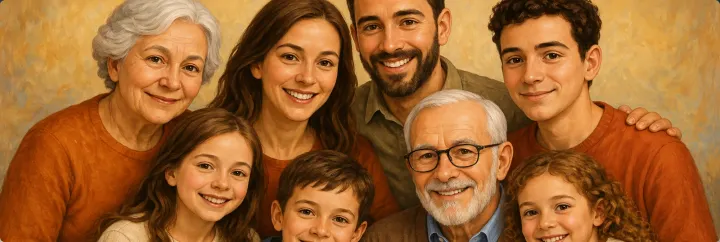
Honouring the roots within us
The presence of those who came before
When we pause and look deeply — into the lines of our hands, into the patterns of our lives — we can trace the presence of those who came before us. Every gesture, every tradition, every moment of intuition carries their unseen guidance.
By reconnecting with our ancestors we open a doorway to self-discovery. Understanding their stories helps us recognise the inherited emotions and beliefs that shape our present life. Through mindful reflection, simple rituals of remembrance and acknowledgment, we honour them — not as distant spirits, but as living parts of who we are today.
Your ancestors are not gone. They are waiting to be remembered, honoured and celebrated within your own journey of growth and awareness.
This page describes a reflective, cultural way of relating to ancestors — a perspective shared by many traditions, offered here as an invitation rather than a doctrine.
Practical ways
Remembering and celebrating your ancestors
Iuri's own recommendations, gathered from twenty years of walking with families — all of them simple, none of them requiring a finished tree.
-
A small place of remembrance at home
The family tree map, a few photographs, some objects: a simple, well-cared-for corner. Passing in front of it, you can pause and say a few words of thanks.
-
Gratitude before judgement
Contemplate a family story without judgement and with a compassionate attitude — even where ancestors made mistakes. Gratitude and respect are the ground of this work.
-
Visit their village
At least once, walk the streets your ancestors walked, breathe the same air, meet the faces of their descendants. Bring something to give back to that place, however small.
-
Welcome the relatives who come to you
In an ancestral village, many of the people you meet are kin. Be happy with those who naturally come towards you, rather than chasing every shared surname.
-
Keep the tree alive
Share stories with children and younger relatives. A tree is not a finished document but a living conversation across generations.
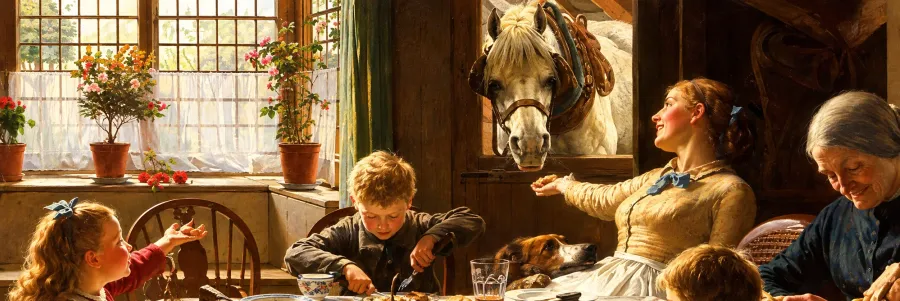
Traditions and family narratives
Questions to sit with
Ancestors work often begins at the kitchen table, with the stories a family tells about itself. These questions are a gentle way in.
- Which traditions did your family keep — and which quietly disappeared?
- What stories were told again and again? What was never spoken about?
- Which values did you inherit without ever being taught them?
- Is there a place — a house, a village, a region — that feels like yours?